The Texas Dairy Industry’s Succession Crisis: A Data Report
People in dairy country talk about a succession crisis, but talk is not data. This report explains what the official numbers can and cannot show about who will run dairies next, and where to read them yourself, since figures change and the headline is an editorial claim to verify.
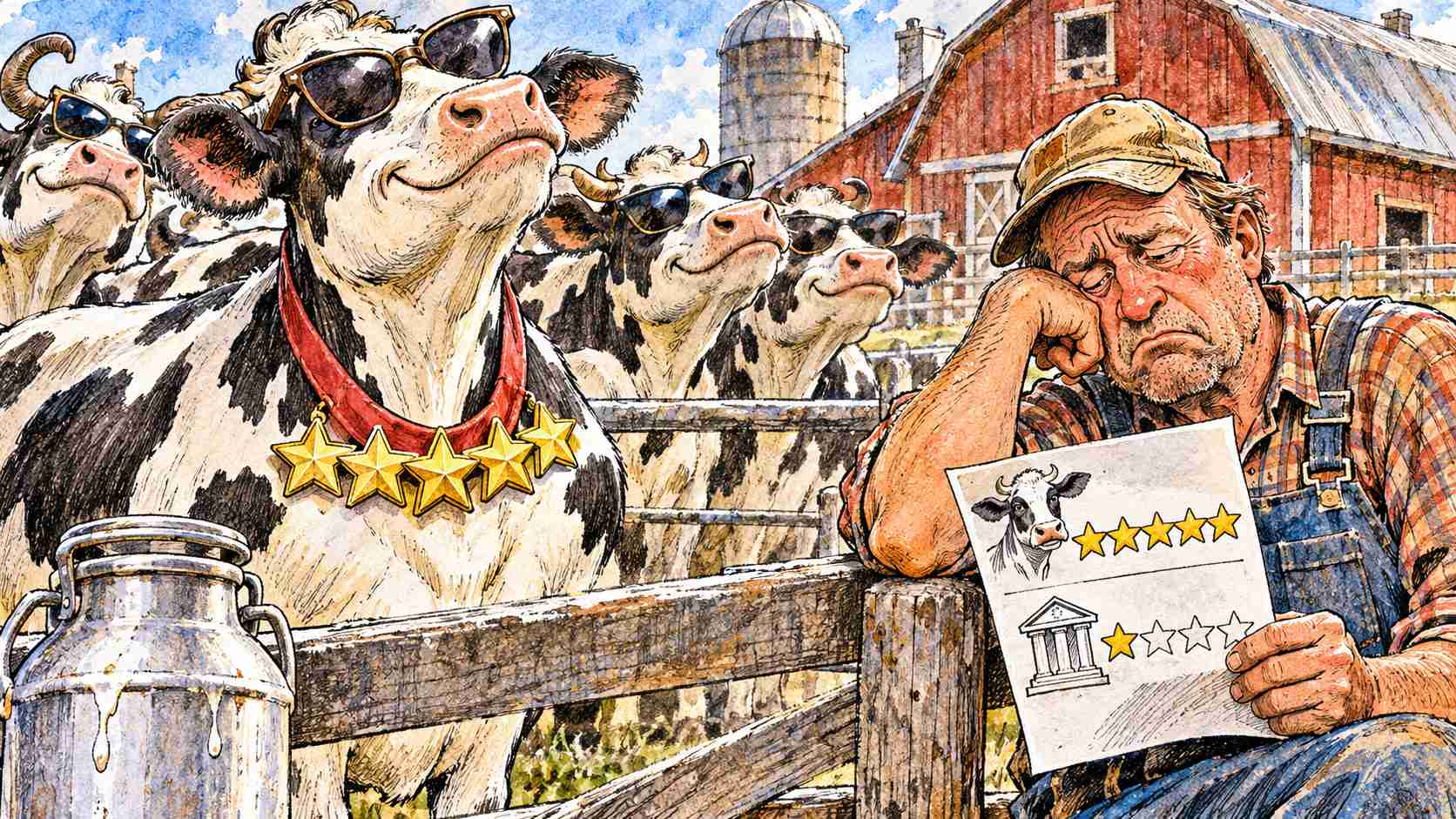
What does succession crisis actually mean?
The phrase usually points to three things: farm operators getting older, fewer young people entering farming, and families without a clear plan for who takes over. Each is a different problem with different evidence.
In dairy, the problem has extra edges. A dairy is capital intensive, demanding and tied to a milk marketing system, so the barrier to entry is higher than for many other types of farming.
Keep that nuance in mind when you hear a dramatic claim. Ask what exactly is being measured.
Which official data should you read?
The best single source is the Census of Agriculture, which reports on farm operators, including age and succession-related items, and on farm numbers by type and size. USDA NASS publishes the surveys behind it and regular reports on dairy herd numbers.
For analysis and context, see USDA Economic Research Service, which covers farm structure and finances. Look for the most recent release, and note its date. Do not rely on an old chart passed around by email.
A good habit is to keep a short log of what each number means, the release it came from and the date you read it. When someone quotes a statistic at a meeting, you can check it in minutes instead of arguing from memory.
How do you read operator age data carefully?
An average age can mislead. A rise may reflect people staying in farming longer, not a lack of successors. Look at the distribution, not only the average, and at how it changed across census years.
Also check how the data defines a producer. Many farms list more than one operator, and a younger spouse or child may be counted. Details like this change the story.
Compare dairy with other farm types and with Texas as a whole before drawing a conclusion.
What does the data not tell you?
The census cannot say whether a particular dairy has a successor or whether a transfer will succeed. It cannot show family plans that are not on paper, and it cannot predict what milk prices will do.
That is why local knowledge matters. Ask lenders, extension agents and processors around Stephenville and the Panhandle what they see on the ground.
Remember that the story differs by region. Dairies in the Texas Panhandle, in the Stephenville area and in East Texas face different land prices, labor markets and processor access, so statewide numbers can hide big local gaps.
- Whether an aging operator has an heir who wants the farm
- Whether a plan exists in writing
- How land, cattle and equipment will be divided
- Whether a dairy will sell instead of transfer
What forces make transition hard for dairies?
Margins, feed costs, labor and regulatory work all weigh on a young person deciding whether to take over. Property values and the price of cows and equipment raise the entry cost.
Programs may help beginning farmers. Check current options at FSA farm loans and Farmers.gov, and compare lenders such as Farm Credit. Terms change, so confirm directly.
Another wrinkle is consolidation. When a retiring dairy sells its cows to a larger neighbor, the farm count drops even though milk production may hold steady. That is a change in structure rather than a vanishing industry, and the data can show both sides if you read carefully.
What can families and communities do?
Start planning early. The step-by-step checklists on Texas A&M AgriLife Extension and the money basics at this farm money guide help families begin. The dairy herd care guide offers background for those thinking about taking over the herd.
Communities can help by supporting local processors, services and training. A thriving support network keeps dairies viable for the next generation.
Ask your extension office whether a transition workshop is scheduled nearby. Meeting other families going through the same thing makes the process feel less lonely.
Where else can you follow the story?
Trade coverage from Hoard's Dairyman and farm group reports add perspective. farm.FM covers dairy stories and satire and farm economics stories, and has a farm.FM story on the next generation too.
Treat any headline claim as a question and check it against the primary source.
Treat the data as a conversation starter at your own table.
Sources and further reading
- Census of Agriculture: USDA census of farms
- USDA NASS: agricultural statistics and surveys
- USDA Economic Research Service: farm economy data and analysis
- FSA Farm Loans: FSA direct, guaranteed, microloan and emergency loan information
- Farmers.gov: USDA one-stop site for producers
- Texas A&M AgriLife Extension: Texas extension service
Ask locally: Ask a Texas A&M AgriLife Extension agent and a local ag lender what they see in your county.