The Record Milk Production Problem: A Texas Dairy Market Analysis
More milk sounds like good news until prices drop. This analysis explains how rising supply affects a Texas dairy market in general terms, and where to find current production and price data.
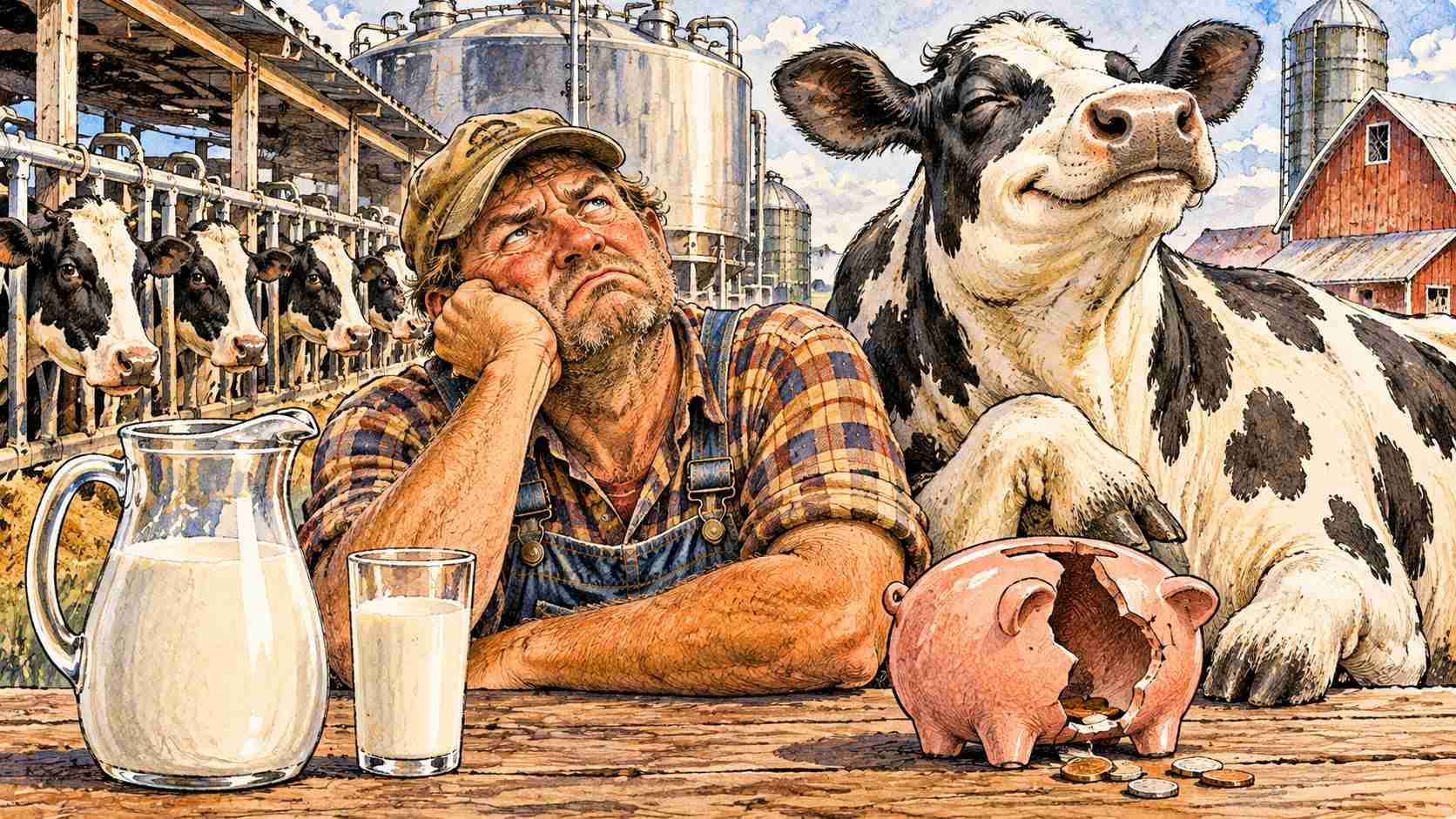
Why would record production be a problem?
Milk is perishable, and supply responds slowly. When production climbs faster than demand, inventories build and prices soften. Producers then face lower checks, and many respond by cutting costs, not by cutting milk.
We do not state production figures here. Check current and historical data with USDA NASS and weekly prices with USDA Dairy Market News, and read about trends at the USDA Economic Research Service.
Seasonality matters too. Milk output rises in spring and dips in summer heat, so a single month's number can be misleading, and analysts usually compare against the same month a year earlier.
What drives production up?
Higher cow numbers, better genetics, improved feed and herd management can all raise output per cow. Expansion decisions made years earlier arrive as new milk when heifers calve. In Texas, expansions in the Panhandle and processing investments have shifted where milk is made and sold.
Production gains are often good for individual farms because they reduce cost per unit. The trouble comes when everyone does it at once and the market has no place to put the extra.
Component yields, the butterfat and protein in the milk, can change the value of milk even when volume stays the same. Ask your buyer how components affect your check.
What drives demand and prices?
Demand comes from domestic consumption, product mix and exports. Cheese, butter, powder and whey each have their own markets. Exports are tracked by the U.S. Dairy Export Council and the Foreign Agricultural Service.
Prices respond to inventory, trade conditions and feed costs. A milk check can fall while feed prices stay put, which squeezes margins.
Trade and policy can shift quickly. Tariffs and export agreements, tracked by agencies such as the USTR, can change where product goes. Follow them, but do not bet the farm on a forecast.
- Domestic demand
- Export demand
- Inventory levels
- Feed and input costs
How does this show up on a Texas dairy?
Your milk price depends on your market and contract. Ask your co-op or buyer how prices are calculated and which benchmarks they use. Know how your check is built before the market moves, not after.
Hauling costs, regional processing capacity and local premiums can matter as much as national prices. A dairy near a plant may fare differently than one far away.
Ask also about deductions, hauling and marketing fees on your milk statement. Small items add up, and a clear picture of your net price helps you compare options.
What can you do when supply is heavy?
Review your cost structure line by line. Talk with your nutritionist, check feed purchasing plans and revisit your debt schedule. If you are weighing growth, run a stress test at lower prices first.
Margin tools such as Dairy Margin Coverage and the guidance in the farm money guide can help. The Dallas Fed also publishes regional economic commentary that may help frame your outlook.
Cash reserves are the best shock absorber. If you have a few months of operating costs set aside, a soft market is painful but survivable, and you have time to adjust.
Where can you get a balanced view?
Read widely: extension economists, trade publications such as Hoard's Dairyman and market reports. Be careful about predictions. Nobody knows the next price, and you should plan with ranges.
At farm.FM you can read dairy business stories with a human touch, including a piece on milk prices and supply. Browse the dairy section and agribusiness stories, and see this dairy herd care guide for cost control ideas.
How do Texas processing investments fit in?
New plants and expansions in Texas can give producers more places to sell and can shorten hauls. They can also pull more milk into the state and change local premiums. Whatever the details, confirm announcements through company or official sources and not through rumor.
Ask your co-op or buyer how new capacity affects your market and contracts. If you are weighing a switch, read the contract carefully, including termination and exclusivity terms, and talk to an attorney before signing.
Sources and further reading
- USDA NASS: agricultural statistics and surveys
- USDA Dairy Market News: weekly dairy price reports
- USDA Economic Research Service: farm economy data and analysis
- U.S. Dairy Export Council: dairy exports
- USDA Foreign Agricultural Service: export markets and trade data
- Dairy Margin Coverage: FSA Dairy Margin Coverage program
Ask locally: Your co-op field representative and an extension economist can explain how your milk price is built.